


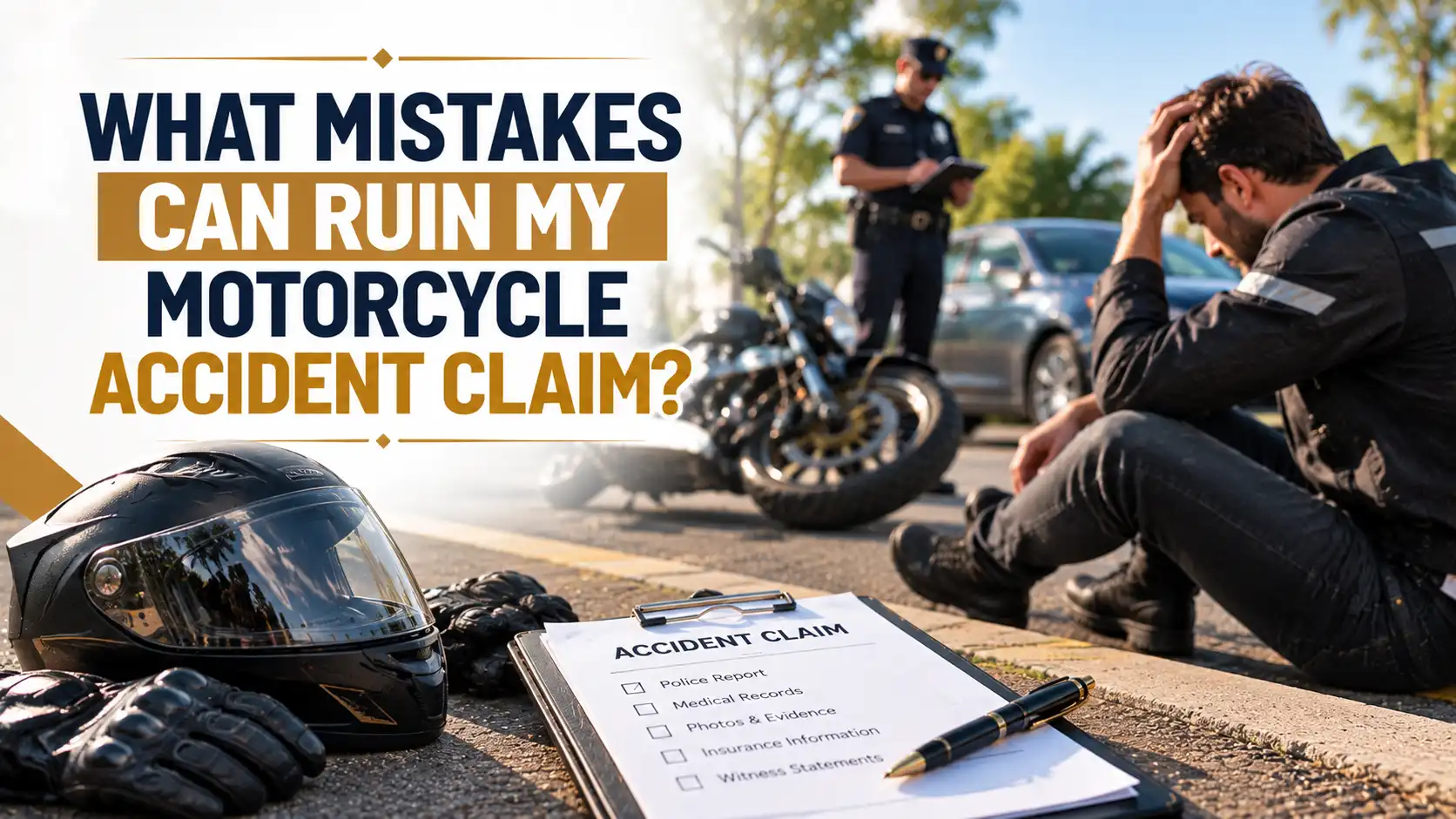
If a motorcycle accident has left you with medical expenses, lost wages, and a long recovery, you may find yourself in need of a lawyer. Sadly, some errors can weaken your compensation claim, even if the other driver was at fault.
Your choices after an auto accident can affect how insurance companies view the case. Being aware of these common mistakes can help ensure your rights are not compromised if you have already been injured due to a motorcycle accident in the Winter Park region.
The General Mistakes That Hurt Any Injury Claim
Delaying Medical Treatment
Delaying medical attention may let the insurance company claim all of your injuries were minor or unrelated to the accident. Seek immediate medical care and follow your treatment plan.
Admitting Fault or Apologizing at the Scene
Never say things like “I should have seen you.” When talking to police, keep it factual, as fault is based on the evidence. Many people will post about the accident on social media. Photos, comments, and activity updates may be removed from context and used to attack your injuries. Do not post about the accident or recovery during the claim.
Giving a Recorded Statement Too Early
Before they know where you were injured, an insurance company might require a recorded statement. You may want to consult with a lawyer before giving detailed answers to the questions from the other party’s insurance company.
Accepting the First Settlement Offer
An initial offer may not account for future treatment, lost earning potential, or ongoing pain. Before accepting a settlement, determine the total damage.
The Mistakes That Are Unique to Motorcycle Claims
The Helmet Exemption Trap
Florida law §316.211 states that motorcyclists over 21 can waive the helmet requirement if they have at least $10,000 in medical benefits insurance coverage for injuries from a motorcycle accident. Under-21 riders are required to wear a helmet most of the time.
Why Insurers Raise It Even When You Were Legally Exempt
Insurers may claim that not wearing a helmet caused head or facial injuries. But not wearing a helmet will not necessarily mean the rider is solely responsible for the crash or that they cannot receive compensation.
Real Example: A Clean Liability Case Discounted Over a Legal Choice
The driver would still be at fault if they had turned left in front of the motorcycle. While helmet use may not matter at the time of the crash, it could matter later in a personal injury case.
Letting the Bike Get Repaired or Scrapped Before It’s Documented
Mechanical inspections, repair estimates, and photographs can help determine impact points and damage. Don’t let anyone repair the motorcycle or throw away these records.
Underestimating Rider Bias
Why Adjusters and Juries Start From a Different Assumption
The insurer’s adjuster may have a history of believing the motorcycle rider was riding too quickly or dangerously. Photographs, testimony, crash reports, and an expert’s opinions can show who is truly at fault.
How This Changes What “Minor” Details Matter
Your lane position and gear selection will be assumed to be a failure by default. Lane position and gear selection will be assumed to be failures and viewed negatively.
Assuming Lane Position or Gear Choices Will Be Held Against You by Default
Lane position, visibility, and protective equipment may affect liability or the severity of injuries. Lane position isn’t the issue, and neither is gear; evidence and the law are. Of course, some things can go wrong and not be fixed in the first 24 hours. Some things can go wrong and won’t be corrected in 24 hours.
Mistakes With Evidence That Are Easy to Make in the First 24 Hours
Not Photographing the Bike Before It’s Moved or Towed
Don’t forget to take pictures of the motorcycle, vehicle damage, road surfaces, skid marks, and the accident scene if it is safe to do so.
Losing Track of Gear (Helmet, Jacket, Boots) as Evidence
Do not discard or repair damaged or lost protective equipment. Therefore, keep your helmet, jacket, boots, and damaged clothing.
Not Identifying Witnesses Before They Leave
Don’t forget to get witnesses’ names and contact information before they leave the scene. The following claims-related pitfalls often arise later in the claims process:
Mistakes That Happen Later in the Claims Process
Gaps in Medical Treatment
Access to medical care can also be limited. Missed doctor’s appointments or atypical visits can also lead your insurer to assume you’ve recovered. Talk to your health practitioner about the obstacles to care, and keep good records.
Inconsistent Statements Across Doctors, Insurers, and Police
Discrepancies between your medical history, insurance documents, and police report can undermine your credibility. Correct and act quickly to ensure accuracy and fix genuine mistakes.
Missing Florida’s Filing Deadline
In most cases, Florida has a two-year statute of limitations for negligence-based personal injury claims arising from accidents that occur on or after March 24, 2023. Generally, the statute of limitations for negligent personal injury claims in Florida is two years from the date of the accident. Exceptions can be applied, so it is not to be assumed that it has the entire period in every case.
Can You Recover If You’ve Already Made One of These Mistakes?
Why a Single Mistake Rarely Ends a Case?
In most instances, a single error does not end the case. One mistake alone is not enough to lose the case. No Claim will be lost if the appointment is delayed, a social media post is made, or a photograph is not sent. The effect depends on the situation, the evidence, and the law.
What a Lawyer Can Still Do at This Point?
At this stage, a lawyer can still play an important role. A Winter Park motorcycle accident attorney will collect more evidence, obtain medical records, interview witnesses, consult with experts, communicate with insurance providers, and determine who may be responsible. If you act quickly, you may preserve evidence and keep your options open.