


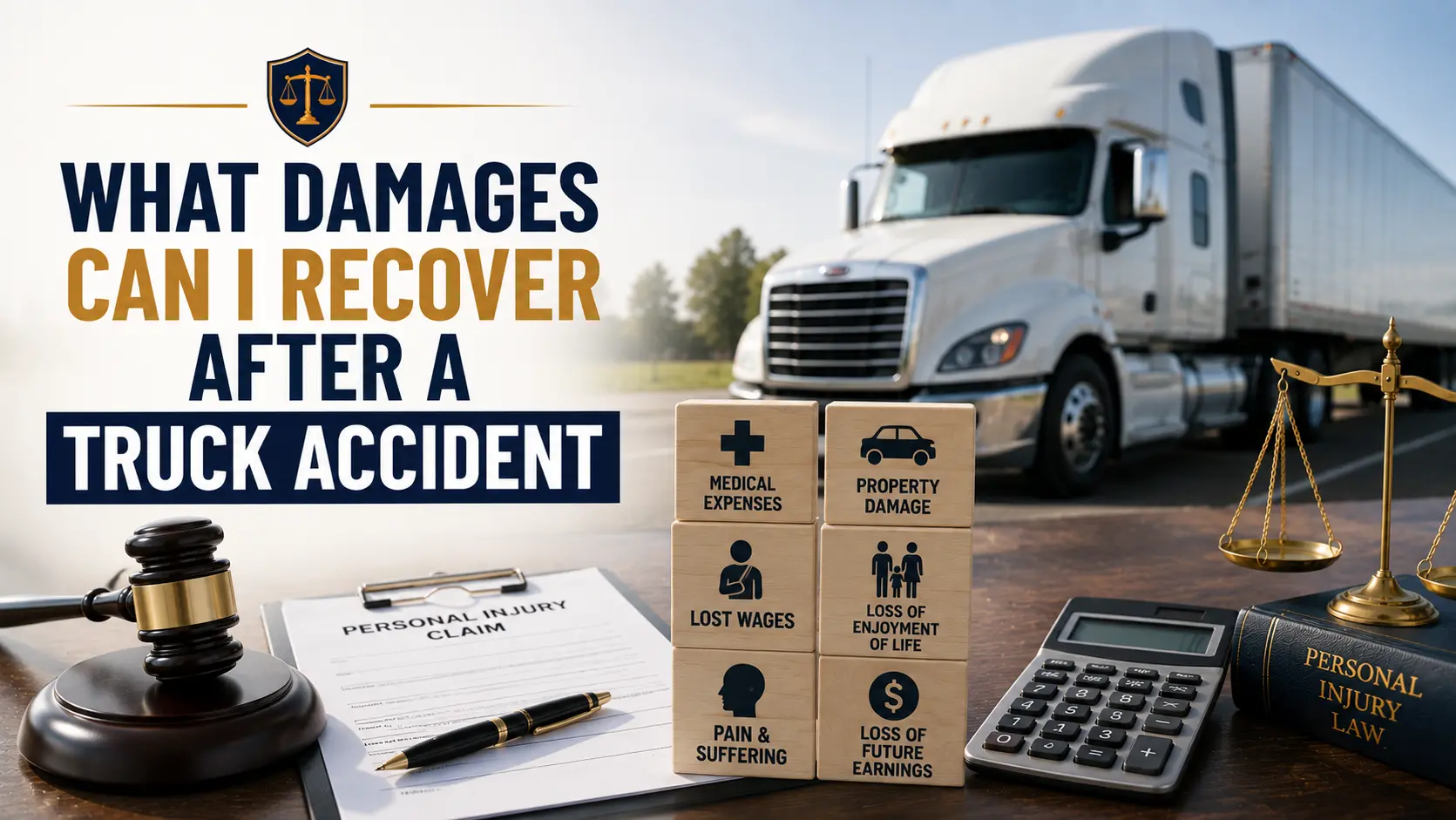
There is no reliable average value for a catastrophic truck accident claim, even in Florida. A severe case is worth exactly what it costs to cover a lifetime of harm, future medical care, lost earning power, and human losses for that specific person. No honest lawyer can ever promise a number before you review the facts. The average figure mostly ranges from USD 200,000 to USD 500,000. These numbers can mislead you. The following blog post is about what damages I can recover just after a truck accident.
They lump together minor cases and catastrophic ones. When someone does suffer a spinal cord injury, a traumatic brain injury, an amputation, or a severe burn, the real value definitely depends on the lifelong impact, not that of a headline figure. According to the truck accident lawyer in Tampa from Abercrombie P.A., this blog is for people who got hurt in a Florida truck crash, and for families of someone killed or permanently disabled. In catastrophic injury cases, our attorneys handle specific and provable costs.
Average settlement numbers tell you almost nothing about your own claim. Every catastrophic case is valued on its own facts, and prolonged requirements that differ severely from one person to the next. The other one is the one who suffers from permanent paralysis and requires care for decades. Averaging them together produces a meaningless middle number. Do think about two crash victims—one who certainly breaks a wrist and heals within a month
However, the Florida Bar’s advertising rules do forbid promising a specific result. We agree with that rule as a matter of plain honesty. Anyone who certainly guarantees a dollar amount up front hasn’t seen your medical records, your bills, and all of your future requirements. If you are comparing lawyers, the Florida Bar’s consumer resources certainly explain how to hire and work with an attorney.
What actually determines truck accident claim value in Florida
The severity and permanence of the injury is the single biggest driver of value. However, the more life-altering the harm, the larger the lifetime cost base a claim should cover.
At times, a permanent injury changes everything at once. It changes whether you can work, how you get around your home, and how much care you will certainly require for the rest of your life. Vehicle crashes are the leading cause of spinal cord injury, which can cause permanent loss of movement and sensation even below the injury level, according to the experts of Abercrombie P.A.
Whereas Florida law allows you to recover two broad categories of harm: One is that of economic damages (measurable money losses) and non-economic damages (human losses). Below we explain both, plus how insurance, fault, and deadlines affect what you can actually recover at once.
Economic damages: the lifetime cost of a catastrophic injury
At times, economic damages cover every measurable dollar that the injury costs you, now and for the rest of your life. Whereas, in catastrophic cases, these numbers are mostly the bigger part of a claim.
They certainly include future and past medical care. It consists of
- Surgeries
- Hospital stays
- Rehabilitation
- In-home nursing
Furthermore, they do include assistive equipment like wheelchairs, prosthetic limbs, and lifelong medications. Several clients do require home and vehicle modifications like ramps, widened doorways, and a wheelchair-accessible van.
Lost Income
Then there’s lost income. If a permanent injury keeps you from working, you can definitely claim lost wages. Most critically, you can definitely claim lost future earning capacity, the paycheck that you will never earn again over a prolonged working lifetime. To prove all of these costs, we work with life-care planners and economists.
Whereas you do require a life care plan that projects every year, the care a catastrophically injured person will require even for decades. It is why catastrophic cases do carry the biggest economic damage of all kinds of injury claims. The National Spinal Cord Injury Statistical Center does track the long-term care realities behind all of these figures.
Non-economic (human) damages: pain, loss, and quality of life
When you deal with non-economic damages, we certainly pay for real human harm, and they never come with a receipt. Most of these losses are compensable under Florida law, even though no invoice exists.
They definitely include physical pain and suffering, permanent disability, and loss of enjoyment of life. A person who once ran or played with their kids might lose abilities forever. These kinds of loss are genuine, and the law even recognizes it.
Whereas a permanent impairment certainly reshapes both independence and relationships. Simple daily tasks definitely require help. It’s why spouses and family members might recover loss of consortium, including compensation for the companionship, support, and intimacy the injury takes away.
The majority of these damages have no fixed formula. Their weight depends on how the injury changed the person’s daily life. According to the Christopher & Dana Reeve Foundation, it documents how paralysis affects millions of Americans’ everyday living.
When a truck crash is fatal: wrongful death claim value
However, when a truck crash kills someone, Florida’s wrongful death act lets surviving family members bring a claim. While a death is the most catastrophic outcome there is, the law centers on the family that is left behind.
Under the Florida Wrongful Death Act, it is the eligible survivors who might recover losses in plain terms like these:
- Lost financial support and services the person provides
- Funeral and burial costs
- Loss of companionship, guidance, and protection
- Mental pain and suffering of certain family members
Certainly, which survivors can recover, and what they can really recover, depends mostly on the circumstances of your family and the facts that are completely associated with the crash. We handle all of these cases with absolute care, focusing on your family and never on graphic details. For context on how often fatal truck crashes take place, federal crash fatality data is mostly published through NHTSA’s Fatality Analysis Reporting System (FARS).
Insurance coverage and why truck cases can be worth more than car cases
At Abercrombie P.A., our personal injury lawyer in Tampa believes that truck cases do carry huge value since commercial trucks are required to carry far more liability insurance than ordinary cars. More available coverage can mean more money to compensate for a catastrophic injury.
Federal rules do require large commercial trucks to carry only minimum liability coverage, just above a typical car policy. It matters, since available insurance is mostly the practical ceiling on what you can really recover.
Truck cases do involve more than one responsible party. Certainly, depending on the overall facts, these might consist of the following:
- The trucking company (motor carrier)
- The truck driver
- The company that owns or loads the cargo
- A maintenance or repair contractor
- A broker or a leasing company
Each of our truck accident lawyers in Tampa carries its own insurance coverage. That is why an experienced attorney should investigate every possible source of coverage instead of settling with the first insurers who make the final call.
How can trucking company negligence increase a claim’s value?
Complete proof is that a trucking company certainly broke safety rules, which do strengthen a claim and increase its value. At times, corporate negligence often points to deeper responsibility than a single driver’s mistake. We look for evidence of hours-of-service violations (a tired driver on the road too long), poor truck maintenance, negligent hiring, and overloaded cargo.
The evidence is often in electronic logs, black boxes, ECM data, and dashcam footage. That evidence does disappear fast. At times, trucking companies might overwrite data or repair a damaged truck within weeks. Acting quickly helps you preserve proof and protect your claim’s value. In severe cases, systemic corporate negligence can certainly support additional claims just beyond the basics.
-
Florida’s comparative negligence rule and the “51% rule”
Florida’s 51% rule definitely means that if you are found more than 50% at fault for the crash, you can never recover any of the damages. If you are 50% or less at fault, your recovery is reduced by your share of the blame. Florida changed its comparative negligence law in 2023 to a modified comparative negligence system. Under Florida law, §768.81, a claimant found more than 50% at fault mostly recovers nothing.
Here certainly lies a simple example. Do say a jury values your damages at USD 1000,00 and finds you 20% at fault.
Furthermore, your recovery drops by 20% to USD 800,000. If you are found 51% at fault, you can certainly recover nothing. It is exactly why insurers work hard to shift blame onto you rapidly. Every percent point of fault they pin on you definitely lowers what they pay you. Careful investigation and evidence help you push back against all sorts of unfair blame.
-
Deadlines: Florida’s statute of limitations
In the majority of Florida negligence cases, you have just two years to file a personal injury lawsuit. If you miss the deadline, even a strong catastrophic claim can be lost forever.
Florida shortened its general negligence deadline even in 2023. Under Florida Statute §95.11, the deadline is around two years for claims accruing on or after March 24, 2023. It was four years. Unique timelines certainly apply to wrongful death claims and to those of certain defendants. It is general information, not legal advice; your exact deadline depends mostly on your facts. However, acting early does protect the cash evidence as we discussed earlier.
What is a reasonable settlement offer in a catastrophic case?
A reasonable settlement offer definitely accounts for your lifetime medical requirements, lost earning capacity, and human losses. At times, early lowball offers are mostly common, just before the full extent of a permanent injury is well known.
Furthermore, insurers sometimes push for a fast settlement soon after a crash. At this point, no one really knows the true long-term cost. While signing early can definitely aid a catastrophically injured person for decades and more.
This is why we mostly wait for maximum medical improvement before placing a certain value on the ongoing claim. MMI is the point where your condition stabilizes, and doctors can certainly predict your future requirements. At this juncture, a life care plan and economists project the real numbers.
An experienced truck accident lawyer in Tampa’s job is to suddenly document that full value and present it clearly to the insurer. It is how you counter a lowball offer with facts, not guesses.
Talk to a catastrophic truck accident lawyer about your claim
One of the most honest ways to learn what your claim might be worth is mostly a case-specific review, not a number pulled out from an average settlement chart. Understanding truck accident claim value in Florida starts with your medical records, your future requirements, and the available insurance.
At Abercrombie P.A., our personal injury lawyer in Tampa is mainly Florida-based and handles catastrophic cases worldwide. We do offer a free, no-pressure case evaluation in both English and Spanish. We can never promise a specific result, and we won’t. But we do provide clear and excellent steps.
To learn more about the injury behind all of these claims, review our pillar guide on catastrophic injury claims and our overview of truck accidents. You can certainly read about spinal cord injuries and traumatic brain injuries.