


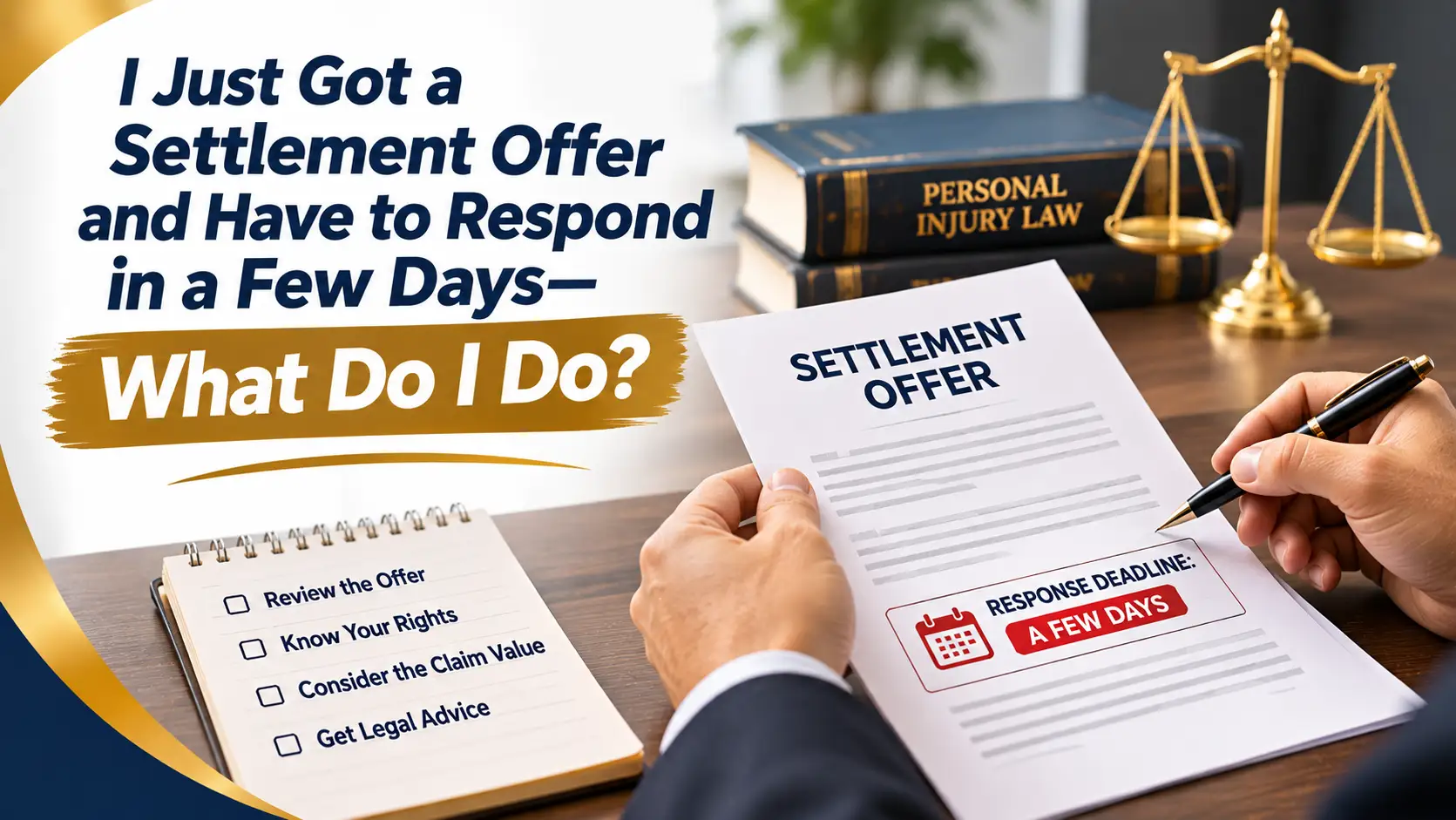
If you have only a few days to respond to a personal injury settlement offer, don’t accept it, and don’t even try to reject it, until you understand what the offer covers and what you might still need.
Having a fixed deadline can be a burden. Yet, your medical expenses, treatment costs, loss of future earning capacity, and legal obligations require careful consideration. Our settlement calculator in Florida gives victims an estimate of what they might win, and a personal injury lawyer in Winter Park can evaluate the offer and provide thoughtful guidance.
First: Don’t Let the Clock Make the Decision for You
-
Why Insurers Attach Short Deadlines
The insurer may set a deadline to speed up their decision, pay a claim, or settle a dispute. A time-limited offer isn’t automatically unreasonable, but pressuring you to decide shouldn’t come at the expense of a thorough evaluation of your claim.
-
Is This Deadline Actually Real?
Review the offer letter for an expiration date, terms, and any language that states when the insurer may revoke the offer. The deadline may be negotiable, but you shouldn’t assume it. If the offer is part of a demand, lawsuit, or other legal deadline, consult a lawyer immediately.
Three Questions to Answer Before You Respond
Have I reached Maximum Medical Improvement (MMI)?
Maximum medical improvement is when your medical condition has plateaued at the best possible level given the treatment. If you’re in a healing process, taking physical therapy, or scheduled for surgery, it’s hard to predict what future treatment and care will be needed.
Do I Know All My Medical Liens Yet?
Some settlement funds may be owed to medical providers, health insurers, and certain government programs through reimbursement rights or claims. Know what liens or payments you may owe, and how much you will be paid, before you accept.
Does This Offer Account for Future Treatment, Not Just Bills So Far?
Your case might be worth more than your current medical bills. Depending on the evidence and applicable laws, your damages may include the cost of future treatment, earning capacity, pain and suffering, and more. A settlement calculator in Florida can give you an initial idea of your case value.
Why a Signed Release Is Final – Even if Things Later Go Wrong
-
There’s No “Cooling Off” Period for Personal Injury Settlements
Your signed settlement agreement and release can permanently close your injury case. Once the agreement is final, you usually can’t reopen your case because your injuries worsened or new problems or costs emerged. The effect depends on your agreement and the law.
-
Real Example: A Deadline That Outran the Facts
A driver involved in a Florida crash is offered $25,000 for their injuries, but the offer is due to expire in 3 days. The driver is in the midst of medical care and has not had time to obtain a prognosis from a specialist. Accepting this payment puts money in the driver’s pocket now, but it may leave the driver with no way to recoup it later.
What a Short Deadline Usually Signals About the Offer
-
Lowball Timing Patterns to Recognize
At times, quick disposition isn’t a tough thing. Be wary of settlement offers that seem too good to be true, undervalue your proven damages, and push you to sign a one-sided release just to get it over with.
Respond to the settlement offer by comparing it to all your damages, proof of liability, and anticipated future costs.
What You Can Actually Do in the Next Few Days
-
Request an Extension (This Is Normal and Usually Granted)
Send the adjuster a letter requesting more time to review the offer, medical records, and release. Write what you need to check with the hospital, doctors, etc., and ask the insurance company to put it in writing. The insurance company might do this.
-
Get a Free Case Review Before the Deadline, Not After
An automobile accident lawyer in Winter Park can review the offer, identify what you might be missing, and explain what a negotiation could require. They could also determine if it is unwise to accept the offer. If it’s coming now, get your own lawyer right now.
-
What to Bring to That Conversation
Gather the settlement demand, your proposed release, accident report, medical expenses, medical treatment records and bills, disability documentation, insurance correspondence, lien and reimbursement notices—document all of your pain and suffering, any treatments, and your future appointments.
If You Do Choose to Accept
What Happens After You Sign
Once you agree, the insurance company may request a release form and other forms before paying. You may have to use settlement funds to pay legal expenses, case costs, medical liens, and other valid debts before you receive the balance.
Florida Law Requires Fast Payment Once You Settle (§627.4265)
Florida Statute §627.4265 covers payment of certain insurance claims after a written settlement or judgment. Whether you receive payment promptly or delayed depends on the nature of your claim and the specifics of your case, so consult a lawyer to be sure.
FAQ
1 A few days later, can an insurance company revoke the offer?
Yes. You may be able to rescind an offer from an insurer after its stated deadline.
2. What if I don’t meet the deadline?
We may withdraw or vary the offer, but you should contact the adjuster immediately to find out if it is still available.
3. Can it be negotiated instead of approved or rejected?
Yes, you may be able to negotiate a different offer with the insurance company. They are not required to offer a counteroffer.
4. Am I too late to get a lawyer if I’m nearing the deadline?
No, you can seek legal advice even as the limitation period approaches, and hopefully as soon as possible.