


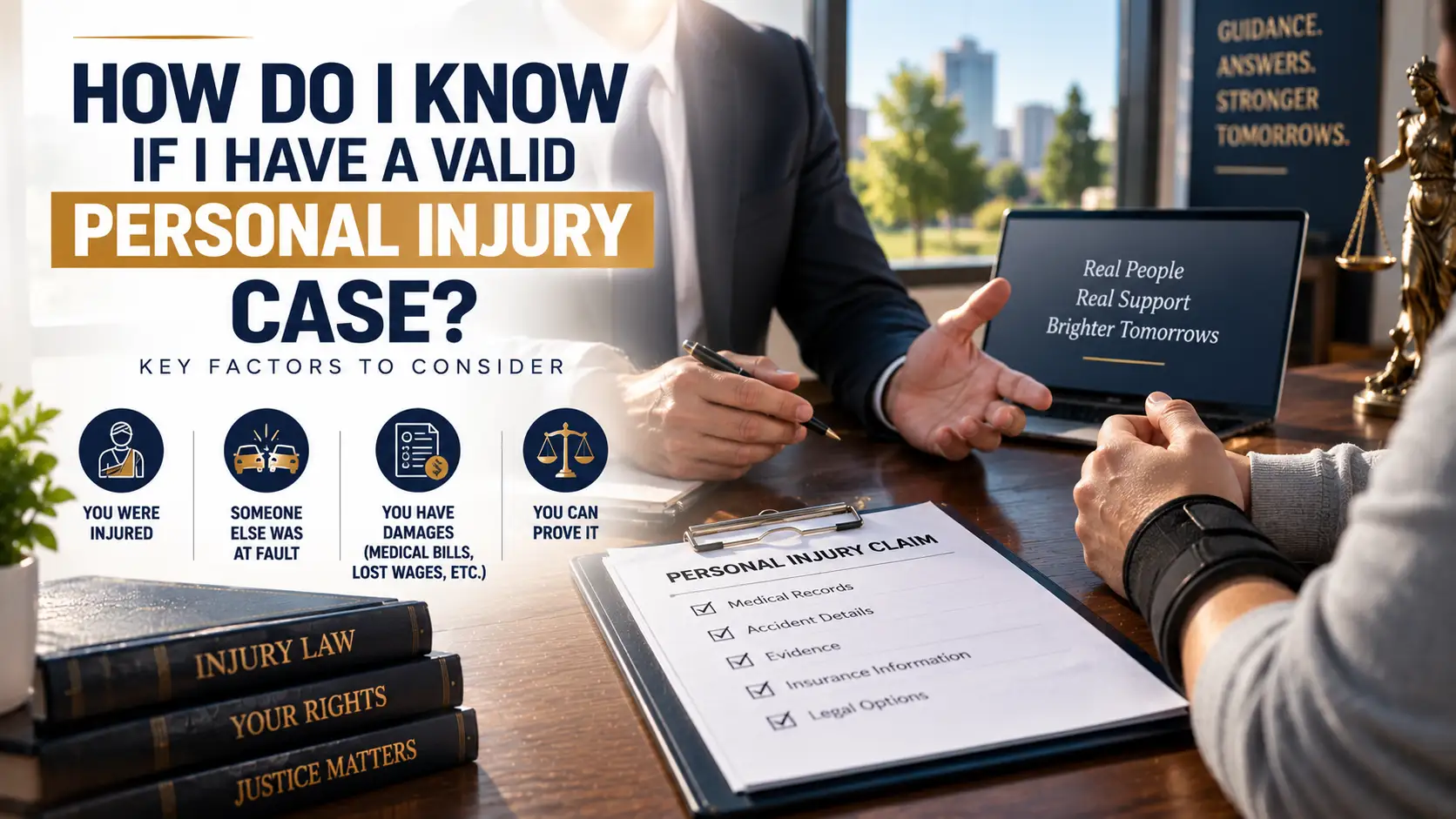
At times, to bring a valid personal injury claim in Winter Park, Florida, you will generally have to prove four things: someone who owed you a legal duty; that they breached that duty; the breach of the duty that caused you harm; and that you certainly experienced damages that a court will recognize under Florida law.
In Florida, certain statutory limitations can play an enormous role in both whether a party may recover any money for a claim and how much. These include rules on comparative fault and a plaintiff’s ability to recover for pain and suffering in motor vehicle cases. Reviewing what happened and outlining the events can also help clarify your rights if you are unsure whether you even have a valid cause of action.
The 4 Elements of a Valid Negligence Claim
Most personal injury suits are completely based on negligence, which arises when a party’s negligence or lack of ordinary care leads to injury. To make out a negligence claim, evidence must support all four essential elements described below:
1. Duty
The first question is one of duty: Who was responsible for you not being unreasonably harmed, who was responsible for you? The right question is: Who was responsible for you? For instance, motor vehicle drivers must drive their motor vehicles safely and reasonably. Property owners may also be required to act reasonably to ensure their guests or customers are not harmed by dangers on the property.
2. Breach
The injured party then needs to demonstrate that the at-fault party had some “duty of care” that it failed to fulfill. A driver might have violated their duty by speeding, reckless driving, ignoring traffic signs, or becoming physically unable to drive because of being intoxicated. However, property owners may have a duty to maintain the property reasonably or to warn guests of hazards they should have reasonably anticipated could exist on their property.
3. Causation
Your third element to prove will be that the defendant injured you. You may show this with photos of the injury and vehicle damage, traffic and accident reports, witness testimony, witness deposition testimony, and expert witness reports. Medical records and medical history will help show how severely you were injured.
4. Damages
At times, the injured party definitely suffered damages due to a unique personal injury incident. These damages may include medical expenses, lost wages, out-of-pocket expenses directly related to the accident, pain and suffering, and other unique damages recoverable under Florida law.
Not all incidents require all four. Damages can also be awarded for an accidental death, even if there are no medical costs. If someone else was negligent, in most cases, that alone will not justify a lawsuit; there are exceptions. You can prove it by multiplying factors together.
Florida’s Extra Requirement: Clearing the “Serious Injury” Threshold
The Personal Injury Protection (“PIP”) system provides a basic level of payment for most medical treatments, regardless of who caused the crash. In addition to what you can recover from PIP, a PIP-covered claimant who wants to collect compensation from the other driver and recover for non-economic damages will typically have to meet a “minimum injury threshold” as outlined in Florida Statute 627.737.
This law states that you can recover for “pain, suffering, mental anguish, and inconvenience” resulting from a motor vehicle crash only when your injuries meet these minimum requirements: (a) “significant and permanent loss of a critical body function,” (b) “permanent injury within a degree of medical probability,” (c) “permanent and significant scarring or disfigurement,” or (d) “death.”
In cases of other injuries for purposes other than a motor vehicle claim, “ Damages, pain, suffering, and mental anguish or loss of consortium may be recovered in cases where the person seeking damages was personally at fault in and not more than the greater of fifty percent. You can recover more under Florida’s comparative negligence statute if you sustained any category of the serious injury outlined above; Florida law allows PIP benefits for basic medical payments-even without one of these injury classifications.
How Florida’s Comparative Negligence Law Affects Your Case (HB 837, 2023)
Under Florida Statutes 768.81 (the law about comparative negligence in Florida claims). Florida law has evolved regarding your ability to pursue a legal claim if your conduct contributed to the incident that caused the personal injury. If Florida courts determine your responsibility was no more than fifty (50) percent, you may collect your damages less the portion of your responsibility.
For example, if a court found your total damages for medical bills and pain and suffering were $100,000.00, but it determined that you bore responsibility for twenty (20) percent of your personal injuries, you could potentially recover only eighty thousand dollars.
Therefore, other drivers will use their knowledge of the facts to try and shift the focus to your culpability rather than theirs. Therefore, photo evidence, surveillance footage, accident report, medical records, and witness statements will be used to demonstrate fault.
Self-Assessment of Your Florida Personal Injury Claim
A “Yes” or “No” question doesn’t provide definitive legal guidance; an accident report alone isn’t a lawsuit. But if your answers are mostly “Yes,” It might be the right time to contact an experienced personal injury lawyer in Winter Haven to discuss your case.
You can bring your own legal claim in Florida. Many cases don’t involve our attorneys from Abercrombie P.A. In reality, very few, if any, will be filed. What could make sense to bring an attorney or a claim involving an incident is for your insurance benefit if you know what your damages might add up to
Quick Self-Check Table
| Question | Why It Matters |
|---|---|
| Was another person or business responsible for your safety? | Try to help establish a legal duty |
| Did they act negligently or fail to act reasonably? | They certainly establish breach of duty |
| Can your injury be connected to the accident? | It certainly supports causation |
| Did you incur medical bills or lose income? | Helps you establish economic damages |
| Do you have medical documentation? | Provides clear-cut evidence of the injury and treatment. |
| Was your injury serious or permanent? | It may affect eligibility for noneconomic damages in motor-vehicle cases. |
| Could you be partly responsible? | Comparative fault can reduce or potentially bar recovery. |
| Do you have witnesses, photos, videos, or reports? | Certain evidence can strengthen your position. |
| Have you received an insurance settlement offer? | Accepting too early may affect your ability to pursue additional compensation. |
When to Get a Free Case Evaluation
Perhaps you should contact us for a case evaluation if your injuries are severe, fault for the incident is contested, an insurance company is alleging your fault, your medical treatment is ongoing, or the insurance company is offering a settlement that you feel doesn’t compensate you properly. You should never assume that an accident that appears minor is an accident you don’t have a case with. Because some injuries show symptoms a day or two later, the true cost may not be visible to the victim.
If you have suffered an injury or loss in Winter Park and would like to know how to proceed, bringing your accident reports, medical records, photos of the accident and injuries, and your auto insurance and health insurance information to an initial meeting can help our personal injury lawyer with their overall review.
At Abercrombie P.A., our personal injury lawyer in Winter Haven will analyze whether your case involves questions of negligence, comparative negligence, damages, insurance policy provisions, and applicable Florida deadlines. You will be much better able to determine if a settlement is sufficient for you, if litigation will be beneficial to you, and if you’re going to get better than the attorney will tell you within minutes how valid or weak your claim is.