


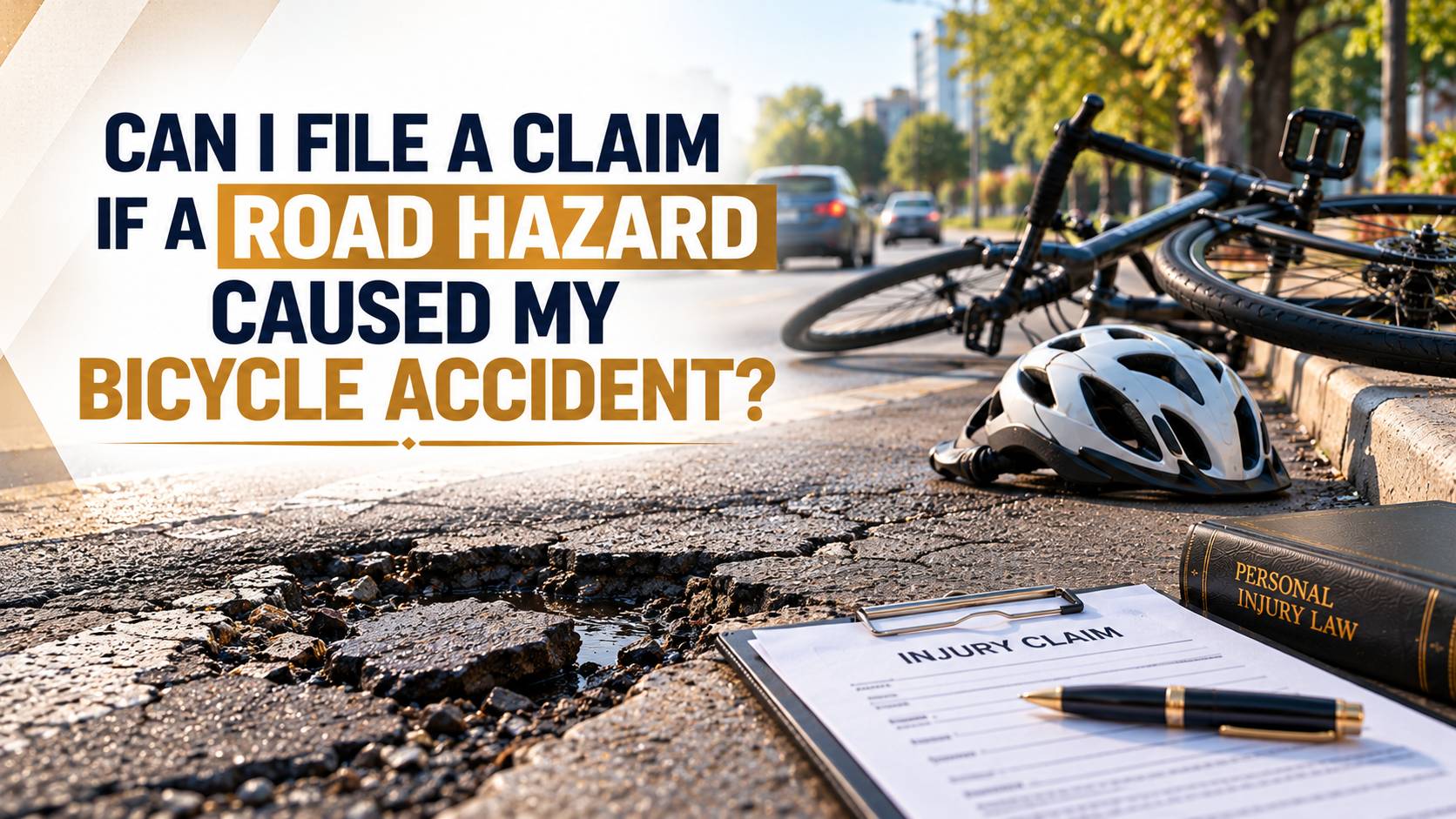
Yes, you may be able to sue if a pothole, broken pavement, clogged drainage grate, junk in the road, or another hazard caused your bicycle accident. The real problem is: Who controlled the hazard, and did that person or entity know or should have known of the problem? A public-road claim may also be subject to Florida’s sovereign-immunity laws, while a hazard on private property is typically governed by premises-liability standards. If you were injured in Winter Park or Winter Haven, call a bicycle accident attorney.
Short answer: Yes – But It All Depends on Where the Danger Was
It depends on where the actual danger lies and the factor you need to prove, as follows.
Private Property vs Public Roadway: Two Completely Different Legal Paths
A pothole or problem street within the jurisdiction of a city, county, or state government may lead to a claim against the government entity. A dangerous condition in a privately owned shopping centre, parking lot, or business location could support a premises-liability claim.
If the Hazard Was on Public Property: Suing the Government
Who’s Actually Responsible? (City, County, or FDOT)
Who owned, maintained or managed the road that was your responsibility? That could have been a county, a municipality, or the Florida Department of Transportation (FDOT).
Florida’s Sovereign Immunity Law, Explained Simply
Florida strips sovereign immunity for certain Florida negligence claims against governmental entities. Still, those claims are affected by the special statutory requirements and limits for Florida negligence claims under Florida Statute 768.28.
New 2026 Damage Caps: What Changed on October 1
Florida never raised the sovereign-immunity caps at October 1, 2026. The Governor vetoed HB 145, which raised the sovereign immunity caps. Therefore, the statutory caps are still at $200,000 per person and $300,000 per incident of the same injury or disease for claims below the caps under current 768.28.
The Pre-suit Notice Requirement – and Why Missing It Kills Cases
At Abercrombie P.A., our bicycle accident lawyer in Winter Park, we know that before suing a government entity, a claimant typically must serve a written claim on the proper agency and meet the presuit requirements. The presentment period for most claims is generally three years, with exceptions such as wrongful death.
What You Have to Prove
-
The Government Had Notice of the Hazard (Actual or Constructive)
You usually require a showing that the agency knew about the hazardous condition or that the condition had existed for such a time that the responsible agency could be expected to have learned of it.
-
The Hazard Was a Foreseeable Danger to Cyclists
A hazardous grate, pothole, broken shoulder, or other defect on the roadway must be shown to pose a foreseeable risk under the conditions.
-
The Hazard Directly Caused Your Crash
Photos, witness statements, accident reports, medical records, bicycle damage, and video can help establish a link from the road condition to the accident and injuries.
-
Real Example: An Unmarked Drainage Grate in Orange County
Example: If a cyclist rides over an incorrectly installed drainage grate on a road and falls trying to dodge it, the cyclist may have a negligence claim against the owner or other entity responsible for the road if proof exists that the defendant knew about the drainage grate and the condition of the roadway and did not take reasonable steps to fix or warn about it.
If the Hazard Was on Private Property
Premises Liability Basics for Bicycle Accidents
When a dangerous condition exists on the property, and the legal conditions for premises liability are met, a private property owner or someone in legal possession of the property may be liable.
How this differs from the Govt’s position (No Caps, Different Notices)
Private claims are usually exempt from Florida’s sovereign-immunity damage caps, and other defences, liability standards, and time limits may apply.
Will Your Own Riding Affect Your Claim?
Florida’s Comparative Negligence Rule
In Florida, the comparative-fault statute reduces damages based on the individual’s blameworthiness.
The 51% Bar – Total Preclusion From Recovery You Can Face
You may be precluded from recovery if you are more than 50% at fault in Florida.
Common Factors That Get Raised Against Cyclists
These include speeding, acting irresponsibly, failing to pay attention, or riding recklessly.
What to Do Immediately After a Road Hazard Bike Accident
-
Document the Hazard Before It’s Repaired
Capture images of the hazard from several angles, including size, positioning, signs on scene and roadway condition.
-
Report It to the Correct Agency
Report to the responsible road authority, and retain the report or confirmation number.
-
Get Medical Treatment and Keep Records
Document your injuries and treatment through prompt medical attention.
-
Why You Shouldn’t Wait to Talk to a Lawyer
Road conditions may change in an instant, and evidence can be lost. At Abercrombie P.A., do talk to a bicycle accident attorney in Winter Park or a bicycle accident attorney in Winter Haven to preserve evidence and identify the proper defendant.