


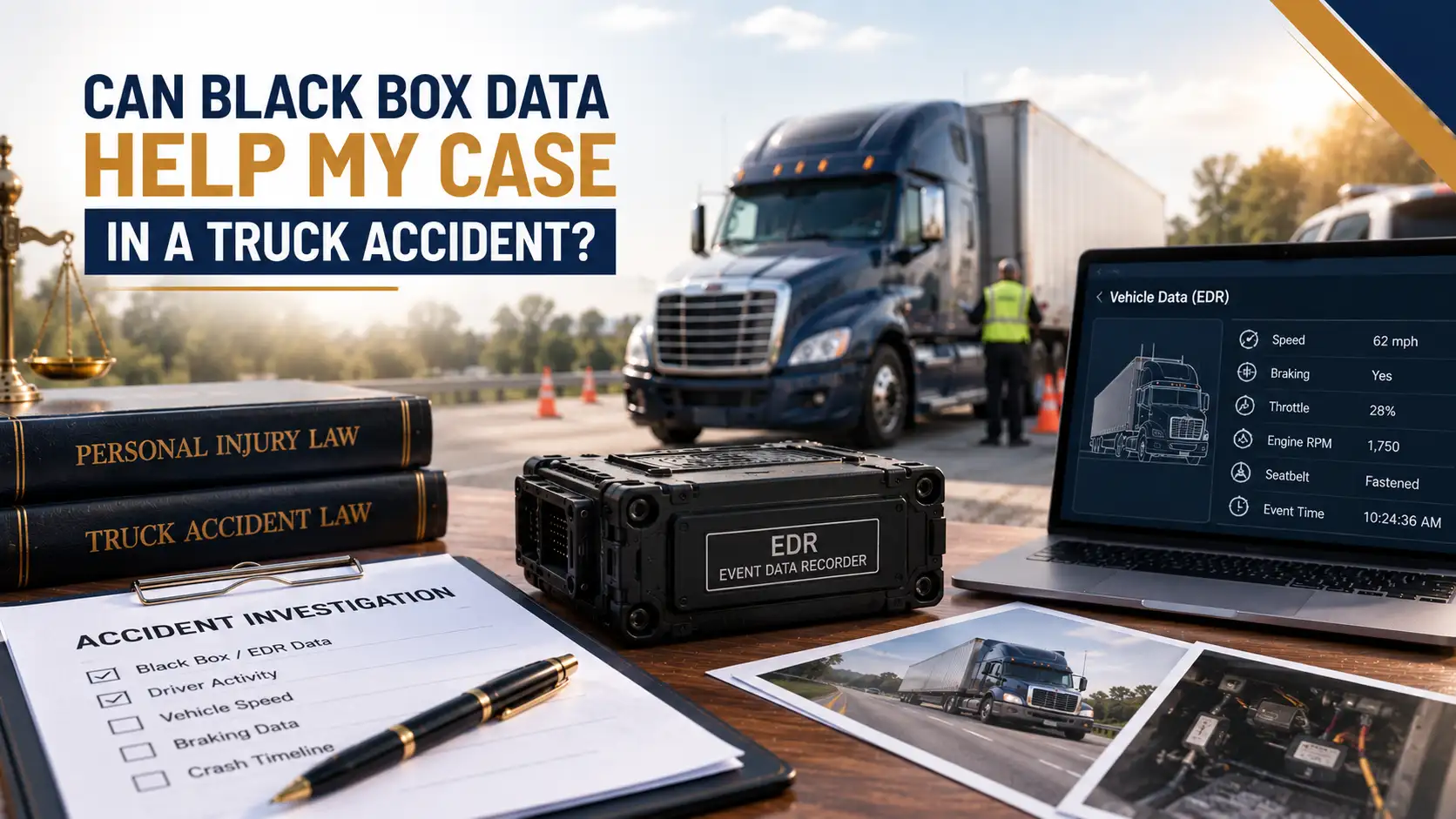
Absolutely! Black box data provides critical, objective evidence in a Florida truck accident case by helping you establish the truck’s speed, braking, engine activity, driver behavior, and other circumstances surrounding the collision. For instance, federal crash research found that driver-related factors were the critical reason in two-vehicle crashes involving a passenger vehicle.
Depending on the truck and equipment installed, electronic data may help you determine whether the driver was speeding, braking, accelerating, working excessive hours, or operating the vehicle differently than the trucking company later claimed.
If you got injured in a collision with the help of a commercial truck, a truck accident lawyer in Tampa will definitely investigate whether electronic data exists and take the necessary steps to preserve potentially critical evidence. Sometimes, a personal injury lawyer in Tampa uses this information alongside police reports, photographs, witness statements, medical records, and accident reconstruction evidence.
What Is “Black Box” Data in a Truck? (EDR vs. ELD)
“Black Box” is a critical term, not the name of a single device. Commercial trucks contain numerous electronic systems that can produce ample information relevant to a specific crash. An Event Data Recorder or truck electronic control module might record technical information related to a specific crash. NHTSA explains that EDRs can capture information on pre-crash vehicle dynamics, driver inputs, crash characteristics, and restraint systems.
Truck electronic control modules contain vital information on vehicle speed, engine activity, braking-related inputs, and other operating characteristics. Research on heavy truck ECM data shows this information can help answer questions about vehicle speed and driver actions just before and after a collision.
An electronic logging device (ELD) serves a unique purpose. It primarily records a commercial driver’s hours of service and duty status information. At times, the FMCSA requires most applicable motor carriers and drivers to use ELDs, subject to certain exceptions.
This distinction certainly matters. EDR/ECM information can help you investigate exactly what the truck was doing. In contrast, ELD information can help you investigate how long the driver had really been working or even driving.
How Black Box Data Helps Prove Fault
Black box and electronic truck data can strengthen a case by allowing definitive comparisons with the driver, the trucking company, and crash-specific evidence.
For instance, the data might aid you in investigating the following:
-
Speed
At times, electronic information can help you determine the truck’s speed just before the collision.
-
Braking
Data can help you determine whether the driver braked and when.
-
Driver actions
Specific systems can provide information about driver inputs around a crash.
-
Hours of Service
ELD records can help you determine whether the driver complied with applicable hours-of-service requirements.
-
Vehicle operation
Sometimes, electronic information can help you identify engine or vehicle conditions relevant to the collision.
-
Conflicting statements:
You can compare this digital record with statements made by the truck driver or trucking company.
This evidence can be especially valuable when the parties disagree about how the accident happened. Black box data don’t automatically prove negligence. A qualified personal injury attorney in Tampa from Abercrombie P.A., and when appropriate, an accident reconstruction expert, can interpret the information regarding the context of the physical evidence and the law applicable to it.
How Long Do You Have Before the Data Is Lost?
No single universal retention period applies to every piece of truck electronic data. Different systems may have different storage practices, and some information may be overwritten or become unavailable.
| Data type | Retention risk | Source |
|---|---|---|
| ELD/RODS records | Moderate – federal retention requirement generally 6 months | FMCSA |
| ELD backup records | Moderate – backup must also be maintained for 6 months | FMCSA |
| ECM/EDR crash data | Varies by vehicle/system | Truck manufacturer/system |
| Fleet telematics/GPS | Varies by provider and company policy | Fleet/telematics provider |
| Dash-camera footage | Potentially high – may be overwritten | Camera/fleet system |
The FMCSA states that motor carriers must retain ELD records of duty status and related supporting documents for at least six months, with a backup copy maintained for at least six months. This makes early action critical. Other electronic evidence might have different retention practices.
What Happens If the Trucking Company Destroys the Data? (Florida spoliation law)
When evidence is destroyed, altered, or lost, and a party has an obligation to preserve it when notice is given or obtained, the dispute may turn on spoliation of evidence. Florida courts have identified certain elements to sustain a spoliation-of-evidence claim.
They are, in sum: a civil action for damages is possible; there exists a duty to preserve relevant evidence; evidence must have been destroyed; the destruction of evidence should impair the claimant’s ability to litigate the claims; there must be a causal connection; and there must be damage suffered.
The ramifications may rest greatly with the facts: destruction of evidence will not automatically cause the injured plaintiff to prevail in the underlying truck accident case.
That is why a timely Preservation or litigation hold demand is appropriate to notify parties to preserve electronic data, including ELD data, ECM/EDR, telematics, dash cam, maintenance records, etc.
How a Florida Truck Accident Attorney Preserves This Evidence
Initially, you may pressure the trucking firm, driver, fleet owner, insurance provider, and others with the knowledge to preserve evidence.
Next, investigators can locate the truck’s electronic systems and determine who has access to each piece of information. When appropriate, an attorney might obtain ELD logs, electronic control module/event data recorder data, GPS/telematics logs, dash-camera recordings, maintenance records, inspection reports, dispatch data, and driver conversations.
If the trucking company is uncooperative, you may need to use formal discovery. The earlier this process can begin, the more likely you are to preserve evidence that may become irretrievable by the time you may need it the most. If you already sustained injuries in a Florida truck accident, you should get in touch with our truck accident lawyer in Tampa from Abercrombie P.A. today.